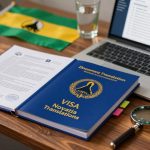
At Novatia Translations, we guide you on official Lesotho visa document translation with precision and care. We translate only into widely accepted languages, and we provide certified translations (notarization only when requested) with originals attached. We determine the required format—certificate, sworn, or standard—and ensure accuracy, consistent terminology, and traceability. We translate core documents (births, police records, diplomas) and provide ready-to-submit packages with side-by-side originals. If you want to know more, we’ve got you covered with practical steps and tips.
Official translations require either certified or notarized translation, depending on embassy instructions; verify which is requested for Lesotho visas.
Attach the original document alongside the translated copy for verification and to preserve meaning.
Translations should be precise, faithful, and include a translator’s declaration of accuracy and qualifications.
Key documents often translated include birth/marriage certificates, police records, diplomas, and employment letters.
Ensure ready-to-submit packaging with side-by-side originals, certification notes, and compliance with apostille or local seal requirements.
What Documents Require Translation for Lesotho Visa Applications
Determining which documents must be translated for Lesotho visa applications hinges on the document’s origin and language. We, as your guidance partners, outline the core rule: any item not issued in English or Sesotho requires a certified translation. Academic records, birth and marriage certificates, police records, and employment letters typically fall under this rule, while standard internal forms may not if they are bilingual. We assess each document’s source, ensuring translations meet the formatting tips: include stamp, signature, date, and you must attach the original alongside the translated copy. Translation ethics demand accuracy, faithful rendering, and no omissions of key details. When in doubt, seek clarification promptly to avoid delays. This approach keeps submissions crisp, compliant, and ready for review.
Which Languages Are Accepted for Translations
Translations for Lesotho visa documents must be in a language that authorities can verify and review. We provide translations in widely supported languages to ensure smooth processing and minimize back-and-forth. In practice, official entities typically accept English, Sesotho, and other major world languages, but requirements vary by consulate. We advise confirming the exact language list for the relevant embassy before submission. We focus on translations in languages with verifiable linguistic standards and standardized terminology to reduce translation errors. We also consider the cost implications, guiding clients toward translations that meet official expectations without surplus complexity. Our team prioritizes accuracy, consistency, and readability to avoid misinterpretation. If language-specific nuances arise, we recommend expert reviewers to preserve meaning and structure, aligning with visa submission expectations and cost considerations.
Certified vs. Notarized Translations: What’s Accepted by Lesotho Embassies
What counts as an acceptable translation format for Lesotho embassies—certified or notarized—depends on the issuing authority, but generally, the distinction matters for official documents. We clarify expectations here so applicants aren’t surprised at submission. In practice, certified translations are preferred when the document requires a formal attestation from a licensed translator or agency. Notarized translations add a notary’s seal but may not meet every embassy’s minimum standard unless specifically requested. Always verify the embassy’s requirement before submission. We focus on practical implications and ethics, including how translation ethics and language accessibility intersect with format choices. Below is a quick reference.
Item
Certification Criteria
Notarization Criteria
Source
Licensed translator or agency
Notary public validates signature
Seal
Official certification seal
Notarization seal only
Acceptance
Commonly preferred
Accepted when specified
How to Determine the Correct Translation Format (Certificates and Seals)
Choosing the correct translation format starts with the document’s purpose and the issuing authority’s requirements. We’ll guide you through selecting certificates and seals that align with Lesotho visa expectations. We assess whether the document needs a sworn, certified, or standard translation, and we verify the issuing body’s stance on apostilles or local seals. When certificates accompany translations, we ensure the translator’s declaration matches the format accepted by embassies and consulates. We also consider how to format invoices and how to translate menus that may appear in business documents, as these often influence the seal or certification level. Our approach emphasizes consistency, legibility, and traceability, so you present a cohesive package that satisfies verification processes and avoids delays.
Common Documents That Must Be Translated (and Exceptions)
We’ll outline the translated document scope and the common exemption scenarios so you know what must be translated and what may not. We focus on the documents typically required to be translated for Lesotho visa applications and the precise exceptions you’ll encounter. This will set the foundation for applying consistent, official translation practices throughout the process.
Translated Document Scope
The translated document scope for Lesotho visa applications covers the common records that must be translated to guarantee eligibility and smooth processing; exceptions are limited and clearly stated. We present the translated scope with exact requirements, avoiding ambiguity. Core documents include birth certificates, marriage certificates, police records, and educational diplomas, along with translating official letters, bank statements, and employment letters when requested. We prioritize accuracy, ensuring names, dates, and issuing authorities render identically in the target language. Where translations are not required, we point to accepted originals in the correct format. Document exceptions are clearly delineated and limited to specified categories, such as unverifiable records or documents issued in minority languages, subject to official review. By adhering to this framework, we minimize processing delays and uphold quality, consistent with the visa guidelines. translated scope, document exceptions.
Common Exemption Scenarios
Common exemption scenarios arise when certain documents, though typically required, are not eligible for translation or meet established exceptions. We present these cases plainly so readers understand what truly qualifies as an exemption rather than a skipped step. Primary exemptions include official government forms issued in languages not covered by our translation roster, provided they accompany a certified summary in English or Sesotho that preserves essential meaning. Some archival records, such as historic documents, may rely on authenticated copies rather than full translations, yet they must still reflect untranslatable nuances. Color symbolism in certain documents should not be misread as a stand-in for translation; we require accurate, verifiable substitutes. When in doubt, we advise requesting an official determination to avoid interpretation gaps, delays, or miscommunication.
Language Quality Standards Visa Officers Expect
How can you ensure your translation meets visa officers’ language quality expectations? We align our approach with formal standards that visa officers rely on for accuracy and readability. We emphasize precise terminology, consistent terminology usage, and faithful, complete rendering of source meaning. Our translations avoid ambiguity, preserve original tone, and reproduce layout elements where required. We tailor language to the Lesotho context, ensuring locale-appropriate phrasing and clear equivalence for official terms. We verify grammar, punctuation, and sentence structure to support rapid comprehension by officers. We prioritize legibility, avoiding jargon unless necessary, and provide concise notes only when essential for interpretation. By upholding language quality, we help visa officers assess applicants efficiently, reinforcing credibility and reducing the need for resubmission. Subtopic: language quality, visa officers.
How to Choose a Translation Service for Lesotho Visas
Choosing a translation service for Lesotho visas requires clarity and reliability: you should prioritize accuracy, timeliness, and proven subject-matter expertise. We evaluate providers on process, certifications, and alignment with official requirements, not marketing speak. Our selection centers on practical outcomes,Transparency in pricing, and documented quality controls.
topic ideas that align with Lesotho visa standards
translation ethics and professional conduct
turnaround guarantees and revision policies
credentialing, confidentiality, and data handling
We recommend requesting sample translations, verifying experience with immigration documents, and confirming that the supplier understands local bureaucratic nuances. Ask about post-translation reviews and interoperability with embassies. We value providers who communicate constraints honestly and adhere to ethical guidelines while delivering precise, legally coherent renderings on time.
Proof of Translation: What Embassies Typically Ask to See
Proof of translation is a non-negotiable requirement at most Lesotho embassies. We present what you’ll typically be asked to show, so you can prepare confidently. In practice, you’ll provide the original document, plus a certified translation, and proof of the translator’s qualifications. Expect to see a signed statement asserting accuracy and completeness, the translator’s contact details, and a declaration of any subjectivity. Embassies also request confirmation of document formatting, ensuring margins, fonts, and pagination align with official standards. Cultural considerations matter too: translations should preserve meaning, avoid casual language, and reflect formal tone. We emphasize consistency across documents, including dates and names, to minimize re-requests and processing delays. Follow these requirements, and your file travels with greater credibility.
Timeline Tips to Avoid Delays in Visa Processing
Building on the required proof of translation, we’ll focus on timelines now: timely filing and proactive steps shorten the overall wait. We outline actionable steps to curb delays, avoiding unnecessary detours like irrelevant topic chatter or off topic discussion that wastes time. By organizing documents early and aligning submission dates with embassy processing cycles, we keep the process moving. We emphasize accuracy, completeness, and prompt responses to requests. Our aim is predictable timelines and fewer back-and-forth requests.
Confirm all translations before submission and double-check names, dates, and permits
Submit applications well ahead of deadlines to accommodate peak periods
Provide scanned copies in required formats to prevent resubmission
Track status and respond quickly to any embassy requests or clarifications
Handling Multilingual Documents and Embedded Text
When handling multilingual documents, we must verify that translations preserve the original meaning and that embedded text—such as stamps, seals, or scanned notes—remains legible and accurately mapped to the translated equivalents. We approach multilingual material with a structured review, ensuring alignment between source and target elements, including non-textual indicators. Our process addresses layout consistency, font integrity, and legibility across languages, preserving document provenance. We flag ambiguous terms and consult authoritative references to uphold translation ethics. Awareness of machine translation pitfalls helps us identify content that requires human expertise, avoiding literalism, misinterpretation, or loss of nuance. We document decisions clearly, maintain traceability, and provide references to sources for future validation. This disciplined practice protects accuracy, reliability, and compliance in multilingual documentation.
Troubleshooting: Addresses, Dates, and Official Stamps in Translations
In handling translations of addresses, dates, and official stamps, we apply a targeted checklist to preserve meaning and authenticity. We coordinate formats, verify spellings, and ensure stamp impressions remain legible across languages. We avoid altering intent, focusing on fidelity and traceability. If ambiguity arises, we revert to source references and seek clarifications before proceeding. Our goal is consistent presentation that survives scrutiny by visa officers and authorities. We address potential renderings, comparing date conventions and address order to prevent misinterpretation. When stamps appear, we reproduce them faithfully, noting origin and jurisdiction. Two word ideas, unrelated topics, remind us to separate metadata from content, preserving core information. Our process is disciplined, transparent, and reproducible for every translation task.
Verify formats and spellings
Preserve stamp integrity and origin
Clarify dates and address order
Maintain audit-ready traceability
Practical Checklist for Ready-to-Submit Translated Documents
We’ll start by confirming that every document is translated completely and accurately, with no omissions. We’ll require certified copies and ensure they match the originals, then attach all authorized signatures where needed. This checklist keeps you aligned with the [POINTS] and minimizes submission delays.
Translate All Documents
So, can you confirm you’re ready to translate every document for Lesotho visa submission, not missing any page or detail? We outline a practical approach to translating all documents with precision, ensuring nothing is overlooked and every item aligns with official expectations. Our focus is translation accuracy and cultural nuance, minimizing ambiguity while preserving meaning and context. We translate headings, dates, names, and numbers consistently, using verified terminology. We verify source document legibility and preserve layout where feasible. We maintain a clear chain of custody for all files and deliverables, and we flag potential issues early.
Verify complete document set before submission
Maintain consistent terminology across all languages
Double-check dates, names, and numbers
Preserve original formatting where possible
Include Certified Copies
Certified copies are non-negotiable for Lesotho visa submissions. We require exact replicas of originals, certified by the issuing authority or a recognized notary, to accompany every translated document. We’ll identify each item banded to prevent delays: full document, side-by-side original and translation, and an official stamp or certification note. We’ll remind you to match names, dates, and case numbers precisely across copies. Include a cover list enumerating items and ensure each certified copy aligns with its translated counterpart. In our experience, missing or misformatted copies triggers requests for resubmission, possibly affecting visa interview timing. Discuss ideas: visa interview readiness and how translation pricing influences total costs, so you budget accordingly and avoid last-minute substitutions. Precision here minimizes back-and-forth and speeds outcomes.
Attach Authorized Signatures
Authorized signatures are non-negotiable for Lesotho visa submissions. We attach signatures only where authorized, ensuring alignment with original documents and translator declarations. Our approach prevents delays and maintains integrity across pages. We confirm signatories’ names, titles, and dates clearly, and we verify each signature matches the required authority. We attach seals or stamps when mandated, and we preserve the exact ordering of translated materials. We avoid unrelated topic commentary or irrelevant discussion that could confuse reviewers. We also maintain legibility, using crisp handwriting or legible digital marks, and we keep copies for our records.
Verify signatories’ authority and presence on each document
Match names, dates, and titles precisely
Include required seals or stamps where applicable
Retain original layout and page order
Frequently Asked Questions
Do Translations Require Apostille or Legalization for Lesotho Visas?
Yes, apostille or legalization may be required for Lesotho visas. We verify apostille requirements and ensure translation authenticity, so your documents meet authorities’ standards. Contact us to confirm specifics and prepare compliant, authenticated translations for smooth processing.
Are Translations Accepted for Electronic or Scanned Documents?
Yes, translations are accepted for electronic documents. We assess translations for electronic documents with the same rigor as paper originals, ensuring accuracy, readability, and proper certification where required; trust our process for reliable translations and translations acceptance.
Who Bears Responsibility for Translation Accuracy and Errors?
We bear responsibility for translation accuracy; accuracy liability rests with the party issuing the translation. We emphasize translation delegation controls quality, and you should require clear accountability to limit liability for errors.
Can Third-Party Translations Be Self-Certified by Applicants?
We answer: third-party translations cannot be self-certified by applicants; they must be accompanied by proper verification. Self certification is insufficient. Ensure translator qualifications are documented, and official procedures followed for reliability, accuracy, and acceptance by Lesotho authorities.
Do Visa Officers Verify Translators’ Credentials on File?
We do verify translators’ credentials as part of due diligence, and visa officers review these records for authenticity. We do emphasize that do translators verification is essential, and visa officer credentials must be clearly documented and traceable.