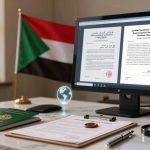
At Novatia Translations, we provide certified translations for Sudan visa applications that meet official requirements. We translate all non-Arabic/English documents accurately, preserve formatting, and attach certified copies with translator statements, dates, and contact details. We verify terminology, dates, and names against originals, and include notarization when needed. Each translation mirrors official samples, with originals attached. We confirm translator credentials and offer quality checks, back-translation, and audit trails. If you continue, you’ll learn exactly how to prepare flawless submissions.
Certified translations must come from sworn or authorized translators with a statement of accuracy, translator’s signature, date, and contact information.
Attach the original language document alongside the certified translation; ensure page order, seals, and bilingual alignment mirror official samples.
Translations should preserve meaning, formatting, and terminology; note uncertain terms for certified review and potential notarization if required.
Translate documents like passports, birth/marriage certificates, diplomas, transcripts, and bank statements when originals aren’t in Arabic or English.
Verify translator credentials, ensure alignment with Sudanese document requirements, and perform back-translation or cross-checks for consistency and accuracy.
What Sudan Visa Translations Are Required and Why
Translation requirements for Sudan visa applications are specific: official documents must be translated accurately into English (or Arabic, as required), and translated copies must be certified. We, as translators, determine which materials must be translated based on the applicant’s situation, ensuring every item aligns with consulate expectations. We evaluate content for completeness, correctness, and legibility, avoiding ambiguities that could delay processing. Our approach upholds translation ethics: preserving meaning, avoiding embellishment, and noting any uncertain terms for certified review. We observe foreign language etiquette in all client communications, clarifying terminology and avoiding presumptions about legal interpretations. We stress that accuracy supersedes speed, and that certified translations must bear appropriate seals and signatures. By adhering to these standards, applicants present a consistent, credible submission package that minimizes risk of denial.
Which Documents Must Be Translated for Sudan Visas
From our prior discussion on which Sudan visa translations are required and why, we now specify exactly which documents must be translated. We require translations for all official identity papers, travel documents, and supporting records submitted with the visa application. Specifically, passport biographical pages, birth certificates, marriage certificates, and any national IDs should be translated if not already in Arabic or English. Educational diplomas, transcripts, employment letters, and bank statements also need translation when presenting non-Arabic originals. Any letter of invitation, hotel bookings, and itinerary may require translation for clarity. Document authentication should precede submission where applicable, and the fee structure for translation services must be clearly itemized. We aim for accuracy, timeliness, and compliance.
How to Choose the Right Translator for Sudan Documents
We verify credentials and sources to ensure accuracy before selecting a translator for Sudan documents. We’ll outline clear translator selection criteria and the methods we use to authenticate qualifications. We invite you to contemplate these points as we discuss how to choose the right translator together.
Credentials Verification Methods
To verify credentials effectively, start by confirming that the translator is certified or accredited by a recognized industry organization and that their specialization matches Sudanese document requirements. We assess verification methods that ensure reliability without ambiguity. We look for verifiable credentials, such as certification numbers, affiliation with recognized bodies, and proof of active status. We ask for references and sample translations with notarization where applicable. We cross-check claims with the issuing organization’s public directories and confirm any required licenses or anti-fraud measures. We avoid irrelevant topic, random chatter, and instead focus on measurable standards: scope of work, turnaround, and data privacy. We explain results clearly, note any gaps, and recommend secure, auditable processes for credential verification that protect client interests.
Translator Selection Criteria
Are you choosing a translator for Sudan documents who can deliver accurate, legally reliable results? We guide you with clear criteria to ensure reliability. First, assess translator ethics: verify professional credentials, confidentiality commitments, and avoidance of automated “rough translations” for official use. Second, confirm subject mastery in Sudanese legal and administrative terminology, plus fluency in both source and target languages. Third, prioritize formatting consistency: consistent layouts, faithful typography, and precise reproduction of stamps, seals, and headings to satisfy visa office expectations. Fourth, demand robust quality control: sworn-in or certified translations, proofread copies, and a transparent revision policy. Finally, ask for sample prior work on government or immigration documents. Our approach ensures accuracy, traceability, and compliance with visa requirements.
Acceptance Formats and Branding Your Translations Must Use
Acceptance formats matter: the translation must present text in a clear, standard layout that aligns with Sudanese visa office expectations. We, as editors, ensure consistent typography, margins, and sectioning across all documents. Use plain, readable fonts, uniform line spacing, and correct pagination. Branding should be restrained: include our firm’s name, contact details, and a concise disclaimer only where appropriate. Page order, seals, and stamps must mirror official samples to avoid processing delays. Maintain accurate headings, numbering, and bilingual alignment where required. Avoid unrelated topic distractions or random chatter in the body text; keep terminology precise and professional. Do not introduce decorative elements that could obscure meaning. Any deviations risk rejection; adherence guarantees smoother verification and faster review by consular staff.
Certification and Notarization Requirements for Official Translations
Verification of translation authenticity is non-negotiable, so we must address certification and notarization requirements clearly and efficiently. We, as translators, outline what official documents demand: certified translations must come from a sworn or authorized translator, include a statement of accuracy, and bear the translator’s signature, date, and contact information. Notarization may be required for certain jurisdictions or consulates, which means the translator’s seal must be verified by a notary public. We recommend attaching the original language document alongside its certified translation and ensuring the translation preserves meaning, formatting, and terminology. Beware distractions like unrelated topic notes or irrelevant details that do not affect authenticity or legal acceptance. If in doubt, contact the issuing authority to confirm specific certification standards.
How to Handle Arabic vs. English Translations for Sudan Applications
We guide you through handling Arabic versus English formats, ensuring you understand how each affects layout, terminology, and document flow for Sudan applications. We’ll outline translation certification standards and how they align with Sudanese validation requirements, so you can prepare compliant, verifiable copies. By clarifying these points—Arabic vs English formats, certification standards, and how they’re validated for Sudan visas—we set a precise path for accurate submissions.
Arabic vs English Formats
Navigating Arabic versus English formats for Sudan applications can be tricky, but clarity matters more than preference. We present guidance with a disclaimer tone and a touch of humor style to set expectations. We prioritize accuracy over showmanship, ensuring documents meet submission standards without conflating languages. When Arabic originals exist, we align translations to preserve meaning, dates, names, and titles, avoiding para-phrasing that alters intent. Conversely, English formats should reflect original content faithfully, using standard administrative terminology and formatting conventions. We recommend consistent spacing, headings, and unit presentation across languages. We emphasize dual-language consistency where required by authorities, and we flag any ambiguities for clarification before submission. Our approach minimizes ambiguity, promotes compliance, and reduces back-and-forth revisions for a smoother visa process.
Translation Certification Standards
When certifying translations for Sudanese applications, we require that Arabic originals and their English equivalents be certified by a qualified translator or a licensed translation service, and that the certification clearly states accuracy, completeness, and faithfulness to the source. Our standard ensures reliability and traceability for reviewers. To guide you, consider:
1) Certification scope and methods to verify both languages
2) Statements of equivalence, including verbatim alignment and meaning
3) Qualifications of the certifier and licensure details
We avoid irrelevant insight and unrelated topic detours, focusing on verifiable certification elements. If you follow these standards, your documents meet scholarly and consular expectations, reducing review time. Precision matters: clarity, consistency, and verifiable signatures affirm trust in every translated page.
Validation For Sudan Visa
To ensure valid Sudanese visa applications, we align Arabic originals and English translations by validating both languages side by side. We verify terminology, date formats, and numbers to prevent misinterpretation. Our process includes cross-checking names, places, and official stamps against the source document, ensuring consistency across versions. We assess translation accuracy against the original meaning, not just literal words, and flag any omissions or edits that could affect eligibility. We document any deviations and provide corrected bilingual text for submission. We also confirm practical details like visa fees and embassy hours are reflected consistently in both languages. This validation reduces delays, supports compliance, and strengthens application credibility for consulates reviewing multilingual files. Precision in translation supports faster processing and fewer back-and-forth requests.
Common Pitfalls That Delay Sudan Visa Submissions
Common pitfalls that delay Sudan visa submissions often hinge on incomplete forms, missing documents, or unclear purpose of travel. We observe these issues and guide you toward swift resolution. To help, we highlight concrete steps you can take now:
Verify form completeness and signature accuracy.
Double-check documents for consistency with visa type and dates.
Clarify the travel purpose to prevent misinterpretation and requests for clarification.
We acknowledge that unrelated topic noise or random discussion can creep into planning sessions, but we stay focused on submission quality. By tightening uploads and aligning intent, you reduce review backlogs. This guidance remains practical, precise, and concise, avoiding tangential idea drift while addressing core documentation reliability. Our goal is to minimize delays and support a smooth visa submission experience.
Timelines and Processing Guidance for Translated Documents
Timelines for translated documents are tight but predictable: we outline processing stages, typical turnaround, and actionable steps to keep your Sudan visa submission on track. We present a clear sequence: document intake, translation, quality review, certification, and submission readiness. We emphasize that each stage has defined metrics, so you can anticipate deadlines and request updates proactively. Our guidance covers document naming, formatting, and translation fidelity to avoid rework. When timelines tighten, prioritize items with the greatest impact on acceptance: accuracy, completeness, and legibility. We also acknowledge that unrelated concept discussions can distract approval committees; we steer back to relevance, maintaining focus on essential content. If clarifications arise, we provide concise responses to minimize delays, ensuring your package remains compliant without unnecessary chatter.
Special Cases: Translations for Birth, Marriage, and Police Records
Special cases like birth, marriage, and police records require careful handling to ensure accuracy and acceptance. We provide clear guidance for these documents, focusing on consistency and official formatting. We handle each category with strict attention to standard terminology and proper names. Our approach reduces translation errors and supports smooth visa processing.
Birth records: capture full names, dates, places, and parent details; include any required apostilles or consularizations.
Police reports: preserve original identifiers, incident dates, and jurisdiction; ensure neutral, factual phrasing.
Marriage documents: reflect exact spellings, dates, and issuing authority; verify cross-references to family relationships.
These steps help ensure that birth records and police reports translate accurately and align with Sudanese visa requirements.
How to Verify Translation Accuracy Before Submission
How can we ensure your translation is accurate before submitting it for Sudan visa processing? We verify accuracy through a structured, multi-step approach. First, we compare source and target texts for meaning, tone, and terminology. Second, we check key dates, names, and numbers against the originals. Third, we confirm formatting and section order align with official expectations. Fourth, we perform a back-translation check to catch errors and drift. Finally, we document any deviations and resolve them with you before submission. Below is a quick reference grid to reinforce our method.
Step
What we verify
Outcome
1
Meaning and terminology
Consistency
2
Dates/numbers
Correct figures
3
Formatting
Official alignment
4
Back-translation
Error detection
Note: irrelevant topic and random topic may arise in the broader context but do not impact core accuracy checks.
Submission Tips: Organizing Translated Documents for the Embassy
Organizing translated documents for embassy submission requires a clear, field-ready package. We present practical steps to ensure swift review and minimize delays. Our approach is concise, precise, and authoritative, guiding you through a streamlined file setup that avoids irrelevant topic detours and off topic tangents.
Compile a complete, ordered bundle: cover letter, translation affidavits, and financial or travel documents.
Use consistent formatting: standard margins, font, and pagination; label each file clearly.
Create a submission index: numbered pages, a table of contents, and cross-references to original documents.
Post-Submission: What to Do If a Translation Is Rejected or Needs Correction
If a translation is rejected or needs correction, act quickly and systematically to minimize delays. We guide you through a careful response that preserves accuracy and compliance. First, identify the specific defect cited by the embassy or translation provider, then review the original document against the translated text. Next, assemble a corrected version that addresses every issue with precise wording and formatting aligned to the official standards. Maintain a clear audit trail, noting updated sections and the rationale for changes. In our translation workflow, communicate promptly with the embassy and the translator, supplying revised pages and any required attestations. Expect prompt re-review; implement post submission corrections without introducing new errors. We prioritize timeliness, correctness, and seamless resubmission to avoid further delays.
Frequently Asked Questions
Do Duplicates of Translations Require Re-Endorsement or Re-Stamping?
Yes, duplicates typically require re-endorsement and re-stamping to verify consistency, accuracy, and chain-of-custody. We recommend confirming with the issuing authority, but generally, you’ll need re endorsement and re stamping for validity.
Can Translations Be Submitted Electronically or Must They Be Originals?
We can submit translations via electronic submission; originals are not required. However, ensure each copy contains a duplicate endorsement where applicable, and keep electronic files clearly legible and securely transmitted for speedy processing.
Are Certified Translations Valid Across Multiple Sudanese Embassies?
Yes, certified translations remain valid across multiple Sudanese embassies, provided they preserve official documents’ integrity and translation credibility. We’ll verify each embassy’s specifics, but our policy supports cross-embassy acceptance when authenticity is clear.
How Long Does a Translation Hold Credibility After Issuance?
Translation validity typically lasts for 12 months from issuance, after which credibility duration may diminish unless renewed or reissued. We monitor changes and advise renewal to maintain acceptance across Sudanese embassies; contact us for precise deadlines.
What Fees Apply to Urgent vs. Standard Translations?
Urgent translation fees apply for rapid results, while standard translation fees cover routine turnaround. We charge accordingly, ensuring transparent pricing, accurate estimates, and no hidden costs. We’ll guide you to choose the option that fits your timeline and budget.