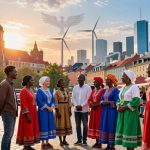
Istanbul is our living crossroads, where ancient stones and neon signs share streets that whisper of conquest, commerce, and resilience. We see Byzantium’s layers beside modern Turkish energy, mosques and churches side by side, markets scenting the air with spice and memory. Geography acts as a pulse—continents collide in minutes, ferries stitch neighborhoods, and bridges hinge memory to improvisation. If you keep exploring, you’ll uncover how tradition and innovation fuse into a dynamic, global city.
Istanbul embodies a layered urban palimpsest where Byzantium, Constantinople, and modern Turkey leave visible imprints on streets, mosques, markets, and neon signs.
The city’s geography as a living variable links seas, waterways, and continents, with bridges and neighborhoods shaping daily memory and mobility.
Sacred spaces—mosques, churches, and synagogues—coexist, fostering cross-faith dialogue through shared rituals, calls to prayer, and art.
Culinary memory and markets fuse East and West flavors, with pastry, coffee, and spice trades guiding social life and reconciliation of traditions.
Contemporary arts, streetwear, craft, and digital storytelling articulate a modern Turkish aesthetic that blends heritage with global influences.
The Historical Layers Shaping Istanbul’s Cultural Crossroads
From the moment you stand in Istanbul, you feel layers of history pressing in: Byzantium, Constantinople, and the modern Turkish state have each left their mark, shaping a city where ancient stones share the present with neon signs. We walk with you through streets that whisper through time, noting how historical layers stack like windows onto different eras. The Bosphorus glints as a boundary, yet sides blend—mosque domes glare against brickwork, and markets hum with both old trades and new startups. This urban mosaic evolves, guided by conquest, commerce, and resilience, while residents move between eras as naturally as crossing a street. Our shared gaze traces continuity, contrasts, and the stubborn vitality that keeps Istanbul’s identity in motion.
Geography as a Catalyst: Continents, Neighborhoods, and Daily Life
How does a city stay itself when its map keeps shifting underfoot? We feel Istanbul’s geography as a living variable, not a fixed frame. We cross continents in minutes, trading Eurasian staircases for European avenues, noting how sea water and asphalt share the same breath. Neighborhoods become laboratories of daily life, each block a microclimate, each bridge a hinge between memory and improvisation. We compare the geographic monsoon—winds, rain, and market rhythms—that redraws moods as surely as seasons redraw skylines. Suburban districts blend quiet lanes with rush-hour escalators, revealing how global flows touch ordinary routines: a coffee cup shared with a stranger, a bus route rerouted by construction, a child’s route to school rerouted by rumor and hope. Daily life adapts, persistently.
East Meets West in Faith, Ritual, and Sacred Spaces
We witness how sacred spaces in Istanbul thread together mosques, churches, and synagogues, inviting us to notice shared rituals and quiet mediation. As readers, we compare how prayer calls, iconography, and scripture echo across traditions, hinting at a common reverence beneath diverse forms. In this exchange, we explore how faiths intersect rather than clash, and how mediation between worlds shapes everyday life.
Shared Sacred Spaces
In Istanbul, sacred spaces pace a city’s heartbeat, revealing how East and West braid faith, ritual, and memory in ways that feel both intimate and expansive. We wander shared sacredspaces where mosques, churches, and chapels sit side by side, and hear histories breathe through stone. Our narration moves between liturgy and lullaby, noting cross culturalfusion in chants, bells, and candles alike. We ask readers to feel not import but proximity, a quiet reciprocity that invites curiosity. This harmony isn’t polished; it’s lived, contested, and cherished. The table below marks a pattern: memory, ritual, place, bound by time. shared sacredspaces frame identity, guiding us toward empathy and sharper sight.
Memory
Ritual
Place
Peace
Pulse
Passage
Time
Tide
Trust
Mediation of Faiths
Mediation of Faiths unfolds where East and West meet, and our walk through Istanbul’s sacred spaces becomes a map of negotiation rather than a settled border. We observe how mosques, churches, synagogues, and mosques again sit side by side, each rendering space with distinct cadence yet shared breath. Our steps trace dialogue rather than dominion, noting how mediation faiths emerges not from uniform belief but from careful listening, verse by verse, ritual by ritual. In these corners, cross faith dialogue shapes memory as much as doctrine, turning pilgrimage into conversation. We compare bells and minarets, drums and psalms, recognizing how time layers practices rather than erases difference. The city teaches restraint, hospitality, and curious openness, inviting us to walk softly, listen deeply, and learn together.
Culinary Synthesis: Flavors That Tell a City’s Story
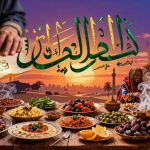
From the moment you step into Istanbul’s markets and bakehouses, you can taste how history has seasoned every bite with memory, blending East and West into something unmistakably local. We savor how culinary synthesis reveals itself in daily rituals, from simit to smoky peppers, as flavors storytelling guides our senses through alleys of memory. We invite you to compare contrasts, noting how spice blends travel with traders and return in new forms. Our shared table becomes a map, each bite a note in the city’s ongoing score.
Market-to-table improvisations
Spice migrations and reconciliations
Pastry craft meeting seaside freshness
Coffee, tea, and lingering conversations
Arts, Crafts, and Spectators of the Modern Turkish Identity
We notice how Arts and Crafts Fusion threads together memory and modernity, shaping a shared visual language that readers can read in streets and studios alike. As spectators of Identity, we compare old motifs with new forms, watching Turkish aesthetics refractor into contemporary expressions. In this evolving landscape, our focus on the Modern Turkish Aesthetic invites you to see how craft and gaze converge in Istanbul’s everyday creativity.
Arts and Crafts Fusion
Arts and crafts in modern Turkey aren’t just a nod to tradition; they’re a living conversation between old hands and new ideas. We look across markets and studios, noting how craft revival threads ancient motifs with contemporary forms, while inviting fresh voices into the loom. The result feels collaborative, not nostalgic, a layered language spoken by makers and viewers alike.
We witness textile sampling informing design, blending warp, weft, and digital prints.
We compare carved wood with laser-engraved surfaces to chart continuity and innovation.
We observe ceramic glazes shifting from earth tones to kinetic, interactive finishes.
We sense embroidery expanding beyond borders, importing palettes from urban streetwear.
In this fusion, viewers become participants, and identity unfolds in stitches, rhythms, and shared craft.
Spectators of Identity
How do we become spectators of identity in a city where every corner hums with collision and collaboration? We watch, listening for the quiet signals that tell a larger story than spectacle. In galleries, on sidewalks, in noodle bars and mosques, our eyes trace how art deformities become shared currencies, how crafts mutate without losing memory. We compare neighboring traditions, noting an identity shift that feels both chosen and inherited, as if Istanbul rehearses new roles while stamping old signatures. Globalization tension threads through markets and studios, pushing innovations toward hybrid forms yet pressing back toward rooted syllables. We remain attentive observers, naming shifts aloud enough to clarify, yet intimate enough to feel them breathe. In this city, spectators become participants, meaning evolves with each encounter.
Modern Turkish Aesthetic
Istanbul’s modern aesthetic emerges where the old city still hums, yet new eyes insist on seeing it differently. We watch how craft evolves, borrowing resilience from tradition while resisting neat labels. Our sense of taste and touch stitches together culinary memory with contemporary forms, pairing saffron with steel, olive wood with glass. We invite you to notice how galleries spill into bazaars, how street musicians contour the skyline with minimalist chords, how ceramic glazes recall Ottoman ink yet glow in neon light. This is not nostalgia; it’s a dialogue.
1) Craft resistance blends hand-made ritual with urban speed.
2) Culinary memory seasons public spaces as performance.
3) Design narrows distance between crafts and technology.
4) Spectators become co-authors of an evolving identity.
Language, Literature, and the Evolution of a Cosmopolitan Voice
Across Istanbul’s streets and the pages of its writers, language unfolds like a living map, shifting with each neighborhood and every immigrant story. We listen, compare dialects, rhythms, and borrowed phrases, watching how Turkish folds in Greek, Armenian, Arabic, English, and slang into one fluid voice. Our cosmopolitan voice grows from dialogue, not dominance, from negotiating meaning at markets, schools, mosques, and cafes. Language evolution isn’t linear; it’s a mosaic that mirrors migration, memory, and modernization. Literature becomes our compass, guiding conversations about identity, power, and belonging. We invite you to trace these currents with us, noticing how prose and poetry braid tradition with experimentation.
Concepts
Examples
Language evolution
code-switching, loanwords
Cosmopolitan voice
global references, hybridity
Space for voices
publishing, salons
Education influence
curricula, translations
Urban texture
street slang, media
Fashion, Design, and the Street-Level Fusion of Old and New
We see streetwear brushing against Istanbul’s age-old craft, a dialogue where color, texture, and pattern tell two stories at once. As we wander the sidewalks, the line between heritage and modernity sharpens into a shared aesthetic of craft, color, and commerce. We invite you to watch how old techniques and new silhouettes mingle, revealing a city that designs itself in real time.
Streetwear Meets Heritage
Walking the neon-edged streets where mosques rise beside skate shops, streetwear in Istanbul feels less a trend than a dialogue between eras, a tailcoated clash and a rooftop wink. We notice how streetwear heritage threads through brick-and-mortar joints, echoing bazaars yet brisk with modern cadence, a wearable tradition that invites remix, not replacement. We share observations, comparing silhouettes, textures, and logos as if mapping memory onto fabric. Here are ideas we observe:
Historic motifs reimagined in utilitarian cuts
Local artisans influencing suspenders, sneakers, and outerwear
Public spaces becoming galleries for asymmetrical layering
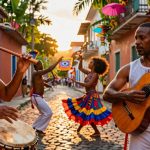
Subcultures weaving in music, café culture, and street performance
This fusion feels deliberate, inclusive, and quietly radical.
Craft, Color, and Commerce
From the city’s fabric stalls to its neon-lit sidewalks, Craft, Color, and Commerce threads the old with the new in a way that feels both intimate and expansive. We watch how craft bloom appears in tiny ateliers, where stubborn tradition meets brisk modern demand, and how designers chase speed without sacrificing soul. The color economy pulses through lantern-lit evenings and storefronts, shifting shades with street-sway and season. We compare boot shiners to couture studios, noting shared patience, divergent tempo. Our table paints a scene:
Makers
Trends
Handloom weavers
Bold palettes
Metalworkers
Minimalist lines
Clay artisans
Vivid prints
Leather crafters
Subtle textures
Glass blowers
Reflective surfaces
Tech, Innovation, and the New Turkish Contemporary Scene
Tech, innovation, and the new Turkish contemporary scene pulse with the city’s restless energy, inviting us to compare old craft with new code and to listen for what difference smart tools make in daily life. We observe how studios fuse modular design with traditional textures, and how startups breathe life into neglected neighborhoods. The contrast isn’t shock but resonance, a dialogue between hand and algorithm. We sense a methodical tempo: testing, failing, refining, replicating. This is tech innovation in motion, not hype. Readers, you’re invited to notice. Here are ideas we’re tracking:
1) Digital storytelling shaping memory
2) Local collaboration networks accelerating prototypes
3) Accessible, street-level urban data
4) Sustainable tech redefining craft routines
Urban Life in Motion: Markets, Ferries, and the Rhythm of Daily Commute
Markets hum, ferries hiss, and the city keeps time with a cadence that threads old routes through new routines. We wander with you, noticing how markets bustle at dawn, spices arcing through the air like memories. Vendors call in cheerful cadences, bargaining glints in eyes that have learned to read weather and worth. Across the water, ferry routes stitch neighborhoods together, passengers swapping stories as the currents pull the hull forward. The rhythm is a conversation: footfalls on stone, wheels turning on bridges, a kettle’s whistle mingling with rope and rust. We compare paths—shortcuts through foggy lanes, longer waits at wharfside benches—until daily life and transit become a single, living map.
Education, Scholarship, and the Exchange of Ideas Across Cultures
How do ideas travel when cultures meet? We watch classrooms echo with questions that cross borders, and we recognize education exchange as a living bridge. We compare lecture halls from Galata to universities abroad, noting how curriculum reshapes itself when scholars listen. Our shared pursuit becomes a quiet dialogue, a scholarship dialogue that grows through chance meetings, translated texts, and collaborative projects. We sense that learning is less a destination than a process, threading through mosques, libraries, cafés, and digital threads. To visualize, consider:
Cross-border seminars
Joint research journals
Exchange students shaping local discourse
Collaborative curricula and public lectures
In this terrain, education forms a tapestry, weaving diverse ideas into common purpose and mutual understanding.
How Tradition Anchors Modern Turkish Identity in a Global Era
Tradition anchors modern Turkish identity not as a relic but as a living compass, guiding how a nation negotiates its past while navigating a global present. We observe how memory threads through daily life, shaping rituals, crafts, and conversation, while new media and markets push us toward farther horizons. Our comparative lens reveals a culture that honors lineage without worshiping it, balancing inherited codes with fresh choices. In urban centers and rural towns alike, tradition shows resilience—reweaving old motifs into contemporary design, sustaining family networks, and keeping language supple yet rooted. This mix fuels global adaptability, letting us engage with strangers and ideas without surrendering core values. We remain vigilant, curious, and collaborative, translating local meaning into global relevance.
What the Future Holds for Istanbul’s Evolving Cultural Blend
What might Istanbul become as its streets weave even tighter between yesterday’s echoes and tomorrow’s possibilities? We sense a city shifting not by erasing its roots, but by expanding them—ultra urban rhythms meeting eco heritage values. Our walk through diverse neighborhoods invites comparisons between concrete and creek, glass towers and marble mosques, quick adaptions and patient preservation. We observe how culture mutates in public spaces, while memories linger in markets and tea houses. The future, we believe, lies in curated hybridity that invites dialogue, not dilution.
Revived crafts alongside tech-enabled studios
Green corridors threading dense districts
Inclusive programming across communities
Cross-border collaborations enriching local identity
Frequently Asked Questions
How Did Istanbul Become a Confluence of Civilizations Over Centuries?
We became a confluence through empires and trade, The Byzantium Legacy guiding our streets, The Silk Road Echoes threading markets and mosques; we observe, compare, and narrate how civilizations met, blended, and reshaped our shared city.
What Unseen Influences Shape Daily Life in Istanbul’s Neighborhoods?
We’re shaped by hidden motifs and crossed histories shaping daily life in Istanbul’s neighborhoods, where daily rituals echo markets and mosques, and neighborhood networks thread strangers into kin. We observe, compare, and narrate how these threads quietly sustain us.
How Do Diverse Faiths Coexist Within Istanbul’s Sacred Spaces?
We observe how interfaith guardianship protects sacred spaces, letting mosques, churches, and synagogues coexist with respect and curiosity, and we compare rituals, so readers feel how neighborhoods hum with shared reverence even amid difference.
What Role Do Markets and Ferries Play in City Identity?
Markets as crossroads shape our city’s pulse, and ferries as lifelines ferry our stories across the water. We observe, compare, and narrate, inviting you to feel how commerce and transit thread identity through everyday Istanbul with us.
How Is Istanbul’s Cultural Blend Evolving in the Digital Age?
We believe Istanbul’s cultural blend evolves through cinematic storytelling and digital heritage preservation, shaping shared memory as neighborhoods mingle, dialects shift, and traditions remix in our screens and archives, offering comparative reflections that invite you to witness our living city.