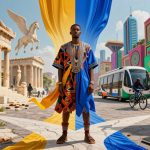
We explore how Afro-Brazilian rhythm, with clave-like pulses, polyrhythms, and dotted accents, threads through Portuguese music and culture. We compare capoeira, samba, and maracatu as core traditions that shape movement, ritual, and community memory, while call-and-response anchors litany, song, and social authority. We see sacred drums in churches and festival spaces as living archives that encode identity across Iberian-African crossings. If you keep exploring, you’ll uncover how language, migration, and tuning deepen these connections.
Afro-Brazilian rhythm features like clave-like pulses and polyrhythms shape Portuguese music’s groove, phrasing, and drive across genres.
Capoeira, Samba, and Maracatu illustrate how rhythm encodes social action, identity, and ceremonial lineage in Brazilian culture.
Language and call-and-response link Afro-Brazilian percussion to Portuguese lyrics, mutating cadence and reinforcing communal memory.
Shared Iberian-African influences blend tuning, timbre, and cadence, reflecting Atlantic exchange between Brazil and Portugal.
Sacred and secular percussion in chapels and festivals anchor community identity, memory, and ongoing cultural transmission.
What Afro-Brazilian Rhythm Is in Portuguese Music
What exactly counts as Afro-Brazilian rhythm in Portuguese music, and how does it show up across genres? We observe patterns that recur, compare forms, and test how rhythms travel. Our lens combines empirical notes—tempo, syncopation, call-and-response—with interpretive readings of meaning in practice. Across samba, choro, and reggae-influenced fusions, Afro-Brazilian rhythms emerge as clave-like pulses, polyrhythms, and dotted accents shaping groove and phrase structure. In experiments like afrobeat fusion, percussion density and shifting meters reveal shared ancestry while signaling contemporary experimentation. Samba inflected guitars enter with swung chords and offbeat emphasis, reinforcing cross-genre dialogue. We invite readers to hear how these traces articulate identity, memory, and innovation within a Brazilian musical landscape that remains plural and evolving.
The Atlantic Bridge: Enslaved Africans and the Portuguese Language
Across Afro-Brazilian rhythms, the Portuguese language itself travels and mutates as a bridge and a reflection of enslaved Africans’ experiences. We examine how speech patterns, loanwords, and syntax mingle with Afro-Brazilian percussion textures to reveal shared histories. Our analysis is empirical: urban lexicons form in markets and churches, while rural chants preserve older forms. Comparatively, enslaved communities forged creoles and pidgins that tempered European norms with West African prosody, yielding distinct pronunciation, metaphor, and cadence. We observe continuity in rhythmical speech as a mirror of spoken tempo in afro brazilian percussion, where call-and-response and polyrhythm shape communication beyond literal words. Capoeira rhythmics, though often noted separately, demonstrates language’s embodied side, linking movement, timing, and vocalization in a fluid Atlantic dialogue.
Capoeira, Samba, and Maracatu: Core Rhythmic Traditions
Capoeira, samba, and maracatu stand as core rhythmic traditions where movement, sound, and social meaning fuse into a shared Afro-Brazilian sonic landscape. We examine how each genre encodes history and community, then compare their distinct cadences and diffusion. Our approach blends empirical observation with interpretive nuance, highlighting how practice shapes perception. We argue that rhythm here is social action as much as sonic pattern, linking body, drum, and community memory. Two word ideas: capoeira rhythm, maracatu heritage. Across contexts, capoeira rhythm emphasizes spatial negotiation and improvisation; samba centers oncollective pulse and urban migration; maracatu heritage foregrounds ceremony and lineage. Together, they reveal a spectrum where ritual, competition, and celebration map to broader cultural identities.
Capoeira rhythm as embodied negotiation
Samba’s collective pulse in urban life
Maracatu heritage and ceremonial lineage
Comparative tempo, dynamics, and cueing
Social meaning shaping musical form
How Call-and-Response Shapes Portuguese Litany and Song
Does call-and-response shape the cadence of Portuguese litany and song in ways that reveal social memory and communal identity? We observe patterns across historical texts and field recordings, comparing litany cadences with folk-chants to trace an ongoing dialogue between participants. Our analysis identifies call and response as a structural tool that choreographs timing, emphasis, and memory, producing litany rhythms that encode shared histories. In churches and public gatherings, alternation between lead and chorus clarifies who voices authority and who preserves tradition, while variation signals regional belonging. We emphasize empirical observation alongside interpretation, noting how response phrases adapt to social context. The comparative frame highlights consistency and divergence, illustrating how call-and-response sustains communal bonds through melodic reciprocity and collective recall.
Drums as Identity: Percussion in Churches and Festivals
We observe how sacred drums anchor community life, persisting from chapels to festival floors. Compared across contexts, percussion becomes a visible sign of collective identity, shaping ritual rhythm and social memory. We invite you to contemplate how these performances in churches and public celebrations reflect sacred practice, communal belonging, and regional percussion styles.
Sacred Drums, Community
Sacred drums bind communities in Brazil’s Afro-Brazilian worlds, where percussion in churches and during festivals creates a tangible sense of belonging and shared memory. We observe how these rhythms mark chapels and open spaces, shaping social bonds through ritual timing and collective breath. Our comparison across sites reveals consistent roles: signaling transitions, coordinating processions, and mediating memory between generations. We interpret the percussion as a living archive, storing meaning in sound and body. The evidence suggests that sacred drums function as identity markers within broader cultural networks, reinforcing community ties and offering a disciplined yet flexible channel for religious devotion. Readers can sense how cadence, gesture, and place intertwine to sustain tradition.
rhythm as social glue
chapels as sonic hubs
percussion as memory
collective breath and timing
ritual continuity across generations
Performed in Chapels
What happens when percussion becomes the architectural feature of chapels and festival spaces, shaping how communities hear and remember? We observe chapels as volumes where Afro Brazilian rhythms become both structure and soundscape, guiding memory through sacred percussion. In these spaces, drums articulate syncopation dynamics that mold ritual tempo, align processions, and mark communal milestones. We compare spaces where walls absorb echoes to those where ceilings propel resonance, revealing chapels heritage as a lived acoustics practice. This empirical view highlights how percussion cultivates identity, linking sacred performance to everyday life. Afro Brazilian rhythms inform practice, while performance in chapels foregrounds intangible heritage.
Structure
Rhythm
Memory
Architecture
Syncopation
Community
Festival Percussion Identity
How do drums in churches and festival spaces shape who we are as a community? We observe, compare, and interpret how festival percussion anchors collective memory and shared identity among identity musicians. In churches, reverberation constrains impulsivity; in festivals, it amplifies expressive risk. We notice patterns: cadence guides ritual behavior, tempo gauges communal participation, timbre signals lineage, and dynamics mark status within groups. The distinction between sacred and secular uses reveals overlapping social functions: cohesion, authority, and memory projection. Our empirical view remains interpretive, noting that performers curate belonging through repertoire and timing, while audiences negotiate belonging through attentive listening. Across contexts, percussion sustains cultural continuity and prompts adaptation.
rhythmic molds
community signaling
sacred-secular dialogue
performer-audience exchange
memory in motion
From Bahia to Lisbon: Migration and Musical Exchange
From Bahia to Lisbon, migration has shaped a dynamic flow of sounds and practices that illuminate how Afro-Brazilian rhythms circulated and transformed across borders. We observe, through field notes and archival traces, that artistic exchange followed labor networks, nightlife circuits, and educational workshops, connecting Salvador’s cadência with Lisbon’s fado-adjacent scenes. The movement yields comparative patterns: similar call-and-response textures, divergent tempo economies, and hybrid ensembles that foreground mobility as creative force. In practice, afrobeat fusion emerges where percussion vocabularies fuse with Portuguese urban styles, while drum circles migrate as social infrastructures—public spaces turning into listening rooms and dance floors. This empirical portrait favors interpretation over nostalgia, emphasizing exchange as negotiation, adaptation, and shared rhythmic intelligence across diasporic routes.
Syncopation as a Cultural Language in Portuguese Sound
Syncopation functions as more than a rhythmic spice in Portuguese sound; it operates as a cultural language that encodes history, mobility, and social negotiation. We observe how accents skip across meters, revealing means of crossing borders, shaping identity, and negotiating space within urban scenes. Through comparison, we see syncopation language at work across Brazil, Portugal, and diasporic networks, as communities repurpose borrowed patterns into local phrasing. Our empirical reading tracks how rhythmic storytelling becomes memory, etiquette, and resilience, not mere decoration. It is a tool for borderline conversations and shared self-fashioning. We propose that these patterns articulate collective experience, inviting listeners to decode lineage through pulse and pause alike.
Movement across genres shapes meaning
Rhythm as memory and negotiation
Cross-cultural borrowing and adaptation
Voice as social index and gatherer
Rhythm as collective identity narrative
Lyrical Echoes: Afro-Brazilian Themes in Portuguese Song Lyrics
We observe how Afro-Brazilianpoetic devices color Portuguese lyrics, shaping sound patterns and meaning in comparable ways across genres. We interpret religious motifs in lyrics as a window into diasporic memory and ritual practice, linking songs to broader Afro-Atlantic traditions. By comparing rhythmic narratives in diaspora-informed verses, we begin to map how community, faith, and history converge in contemporary Portuguese song lyrics.
Afro-Brazilian Poetic Devices
How do Afro-Brazilian poetic devices shape the texture of Portuguese song lyrics? We observe patterns that go beyond single lines, revealing structures that guide meaning and pace. Our comparison across recordings shows how rhythm, metaphor, and repetition interact to convey communal memory and individual nuance. We note that afro brazilian meter often folds polyphonic timing into phrases, aligning syllables with drum cycles and breath. Call and response dynamics emerge as a formal device, enabling listener participation and shaping interpretive layers. We assess how poets negotiate tension between orality and literacy, between improvisation and fixed text. The result is a textured lyric field where rhythm, imagery, and social reference work together to deepen resonance and accessibility.
afro brazilian meter
call and response dynamics
polyphonic timing
communal memory
improvisation vs fixed text
Religious Motifs In Lyrics
Religious motifs weave through Afro-Brazilian lyrics as a persistent layer that both grounds and expands the song’s meaning. We observe how references to Candomblé and Umbanda concepts surface in verses, layering ritual significance onto everyday experience. Across genres, sacred drums emerge as sonic anchors, signaling tempo shifts that correspond to trance states or communal calls. We compare how authors treat ancestry—honoring elders while reconfiguring myths for contemporary life—demonstrating a dialog between tradition and innovation. Empirically, these motifs legitimize emotional intensity through spiritual symbolism, rather than mere metaphor. We note variation: some lyrics foreground deities, others gesture toward protective ancestors, alluding to communal memory. In sum, religious motifs function as structural and symbolic currency, while sacred drums reinforce communal cohesion and ethical reference points within the songs.
Diasporic Rhythmic Narratives
Are diasporic rhythms in Afro-Brazilian lyrics, with their call-and-response cadences and tracing of ancestral routes, simply decorative echoes, or do they map a living map of migration, memory, and identity? We argue they anchor inquiry, not ornament. Our comparison across songs reveals how Afro Brazilian diasporas shape narrative time, linking past routes to present sounds. Capoeira percussion underscores these links, transforming movement into lyric propulsion. We observe thematic threads of displacement, resilience, and community, encoded through rhythmic layering and vocal dialogue. This empirical reading aligns with interpretive aims, explaining how lyrics function as cultural archive. It also highlights variation across regions and eras, clarifying how local practices recalibrate universal diasporic meaning.
Call-and-response as structure
Migration as lyric motive
Capoeira percussion as sonic backbone
Memory stitching through cadence
Identity forged in performance
The Cultural Feedback Loop: Portuguese Cultural Practices That Ride Afro-Brazilian Rhythms
What makes the cultural exchange between Portugal and Afro-Brazilian communities so enduring isn’t just the borrowing of rhythms, but the way these Afro-Brazilian tempos shape Portuguese practices as they travel. We observe a feedback loop where ritual improvisation in communal life informs festival timing, dance etiquette, and communal singing, while Portuguese ceremonial forms subtly redirect Afro-Brazilian energies back into local memory. This cultural miscegenation appears not as fusion but as layered adaptation, producing distinct practices that travel across regions. Comparisons across urban and rural settings show how tempo-influenced habits modulate social cohesion, authority rituals, and educational repertoires. Empirically, the loop demonstrates reciprocal influence: Afro-Brazilian rhythm catalyzes new Portuguese forms, which in turn recalibrate expectations for ritual participation and communal storytelling.
Instruments and Tuning: Iberian and African Musical Confluence
Instruments and tuning reveal a tangible confluence of Iberian and African sonic sensibilities, where shared demands on resonance, tempo, and timbre produce a blended instrumentation across regions. We hear practical overlaps in scales, call-and-response phrasing, and the propulsion of rhythms that travel between coastal ports and inland towns. Our assessment is empirical, noting how Iberian rhythm informs drum patterns while African percussion shapes string and wind textures, yielding an integrated sonic palette. We compare ensembles, observe tuning practices, and track material choices, then interpret how cultural exchange redefines expectations of balance, syncopation, and sustain. The result is a dialogic system that travels, adapts, and clarifies regional identities.
Iberian rhythm influences drum cadences
African percussion shapes timbral layering
Shared tuning experiments emerge across ensembles
Call-and-response patterns unify parts
Regional identity evolves through cross-pollination
Modern Echoes: Afro-Brazilian Roots in Contemporary Portuguese Music
We observe Afro-Brazilian rhythms shaping today’s Portuguese soundscape, and we compare how these patterns surface across genres from pop to fusion. Our reading suggests that contemporary tracks fuse traditional cadences with urban textures, creating a transatlantic dialogue rather than a simple borrowing. In this light, we invite you to contemplate how today’s rhythms both reflect roots and remix them for new cultural meanings.
Afro-Brazilian Rhythms Today
From samba-inflected rhythms to drum-and-bass hybrids, Afro-Brazilian influences pulse through today’s Portuguese music scenes in ways that mix nostalgia with novelty. We observe rhythmic fusion in clubs, studios, and street performances, where traditional cadences meet electronic textures, reshaping taste and technique. We compare cities: Lisbon’s fado-adjacent lines absorbed into basslines; Porto’s percussion pedagogy guiding new ensembles; and coastal communities blending capoeira-inspired phrasing with trap loops. Our interpretation notes how audiences respond to cross-genre experiments, signaling a durable, evolving lineage. If we measure impact, collaboration and hybridity appear as core drivers, not mere curiosities.
rhythmic fusion as method and message
experimental ensembles and cross-genre projects
urban and regional continuities in practice
percussion pedagogy shaping new players
audience reception and cultural exchange
Modern Portuguese Soundscapes
How have Afro-Brazilian rhythms and Portuguese sensibilities converged to shape today’s soundscapes across Portugal? We observe a deliberate blend where Afrobeatfusion threads rhythmic intensity with Portuguese melodic clarity, creating hybrid motifs that travel beyond Lagos to Lisbon and Porto. Our comparisons reveal that contemporary producers synthesize samba’s syncopation with fado’s restrained expressiveness, producing music that both nods to tradition and asserts modern identity. Empirically, audiences respond to this cross-pollination through festival circuits and streaming metrics, confirming broad appeal alongside niche interest. Interpretively, we read these soundscapes as a dialog between diaspora memory and local resilience, a cultural negotiation rather than a mere merger. We also note festival gastronomy’s social role, framing concerts as multisensory experiences that deepen communal immersion.
How to Listen: A Guided Tour of Key Recordings and Places to Explore
Jazzed by the idea that sound maps culture, we’ll trace Afro-Brazilian roots through a curated listening tour and a few pivotal places. We compare recordings and spaces to illuminate rhythms, textures, and histories, highlighting how sonic diaspora shapes Portuguese music.
Rhythm-focused tracks that fuse samba, fado, and batuque
Historic studios or clubs where cross-cultural sessions occurred
Field recordings capturing street and ritual soundscapes
Key albums that crystallize migration-era exchanges
Museums or neighborhoods preserving Afro-Brazilian memory
This rhythmic ethnography approach lets us hear connections second-by-second, not just in conclusion. We invite you to listen actively, note contrasts, and reflect on lineage, ancestry, and place. Our aim is empirical clarity fused with interpretive insight to map a living, comparative soundscape.
Frequently Asked Questions
How Did Afro-Brazilian Rhythms Influence Portuguese Church Music?
Afro Brazilian influence shaped Portuguese liturgy shapes, as we observe colonial syncretism blending folk rhythms with church chants; we compare tempos, percussion touches, and modal colors, noting how rhythms, keys in folk rhythms, transformed sacred expression.
Which Cities Preserved Afro-Brazilian Percussion Traditions in Portugal?
We’d say cities preserved percussion traditions most visibly in Lisbon and Porto, plus Coimbra, where festivals and diaspora connections sustain Afro-Brazilian rhythms; our comparative view notes distinct influences, and their empirical persistence reflects ongoing cultural exchange across Portugal.
What Role Do Women Play in Afro-Brazilian Musical Practices in Portugal?
Women lead in many ensembles, shaping gendered percussion traditions while mentoring younger players; we observe leadership roles, compare communities, and interpret how women’s leadership influences repertoire, pedagogy, and performance across Afro-Brazilian-influenced scenes in Portugal.
How Do Afro-Brazilian Rhythms Appear in Contemporary Portuguese Pop?
We observe Afro Brazilian rhythms in fado influencing tempo and timbre, while contemporary samba pop fusion reshapes rhythm sections; we compare cross-genre patterns, interpret attachment to heritage, and report how these blends expand Portugal’s pop landscape.
Are There Afro-Brazilian Elements in Portuguese Folk Dances Today?
Yes, we observe Afro Brazilian elements in Portuguese folk dances today, with Afro Brazilian influence shaping contemporary folkways; our comparative analysis notes continuing, nuanced integration across regions, revealing evolving patterns distinct from older traditions.