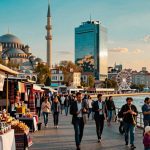
We invite you to explore how Rumi’s breathy metaphors meet Isfahan’s marble light through a Nigerian lens. We compare rhythms across languages, noting how hospitality, poetry, and daily ritual travel and transform. We map Isfahan’s quiet architecture onto Nigerian urban poetry, and see shared themes of love, longing, and hospitality as bridges, not barriers. If you keep exploring, you’ll glimpse practical paths to connect these cultures in modern life and media.
Explore how Rumi’s universal themes of longing, wonder, and belonging resonate with Nigerian hospitality and daily life.
Compare translation nuances to preserve rhythm, imagery, and implied motion across Persian, English, and Nigerian contexts.
Highlight Isfahan’s architectural beauty as a bridge between Persian heritage and Nigerian urban poetry in modern media.
Show how festivals, food, and folklore act as cross-cultural connectors, linking Lagos rhythms with Isfahan’s cultural traditions.
Provide practical guides for Nigerians to engage with Persian culture through media, festivals, and accessible translations of Rumi.
Why Rumi Still Speaks Across Cultures
Rumi’s words travel because they’re less about a time and place and more about a shared human ache: longing, wonder, and the search for belonging. We see that ache echoed in abstract linguistics as sounds shift, yet meanings endure, crossing borders with intimate precision. We hear it in urban ecology too, where cities pulse with borrowed songs, habitats remixing themselves in response to migration and memory. We, readers and neighbors, compare echoes across cultures, noticing how metaphors seed new listening rooms rather than closing doors. His imagery threads universality through specific texture—flower, fire, fountain—reminding us that communication thrives when senses align. In this ongoing conversation, Rumi remains a common reference point, a bridge built from vivid perception, patient listening, and the stubborn, hopeful habit of belonging together.
A Nigerian Lens on Persian Hospitality
We notice how Nigerian hospitality nurtures warmth with guests, a reflex that echoes in Persian welcomes and etiquette, inviting curiosity rather than obligation. As we compare Isfahanian gracious traditions with our own, we see shared aims of making strangers feel seen, fed, and at ease. We’ll explore how these practices shape conversation, choice of words, and the quiet rituals that signal respect in both cultures.
Nigerian Perspective On Hospitality
A hospitality scene unfolds like a gentle conversation, and as Nigerians, we bring that warmth to our reading of Persian hospitality. We observe how Persian hosts balance ceremony with ease, and we see echoes of Nigerian hospitality rituals, reinterpreted through shared curiosity. Our lens compares timing, generosity, and attentiveness, noting how culinary rituals invite participation without imposing rules. We listen for pauses, tastes, and stories, finding a rhythm that respects guests and home alike. In this cross-cultural playlist, hospitality becomes a bridge, not a barrier.
We notice the careful welcome that invites dialogue as much as food
We compare communal dining practices, noting rhythm and role
We value generosity tempered by restraint, a harmony of hospitality rituals and culinary rituals
Persian Welcomes And Etiquette
Persian welcomes unfold with a quiet choreography that invites conversation as much as comfort, and we notice how etiquette threads patience, eye contact, and ritual into every greeting. We observe how hospitality etiquette shapes generosity, offering tea before talk and a seat before sharing stories. In our Nigerian lens, Persian greetings feel deliberate yet warm, balancing form with warmth, formality with familiarity. We contrast the ritual kiss or kiss-like touch in some regions with the more restrained handshake here, noting intention behind every gesture. We appreciate the subtle dance of modesty and graciousness, where hosts anticipate needs and guests acknowledge hospitality with gratitude. Our comparative gaze reveals cultural signals—silence as respect, questions as interest—guiding respectful exchanges across borders and time.
Isfahanian Gracious Traditions
Isfahanian gracious traditions reveal a hospitality that feels both rooted and refined, a natural extension of the careful courtesy we noted in Persian welcomes. We observe how hosts balance warmth with discretion, turning space into dialogue and time into welcome. Our Nigerian lens notices echoes of isfahanian etiquette in every step, from the bow of a host to the patience of tea service. The marble cityscape provides a quiet stage, where conversations unfold along cool corridors and sunlit courtyards.
Guests are escorted with gentle pace, allowing natural conversation to unfold.
Tea pours are deliberate, inviting lingering, not rushing departure.
Guests are offered on-handoff gestures of care, respectful and practical.
The Heartbeat of Isfahan: Architecture and Awe
We feel the City of Marble Hues guiding our gaze as we compare its light-filled arcs to the shade-softened courtyards we recognize at home. In Isfahan, we see architecture weaving light and shade into a living rhythm, inviting us to read walls the way we read poetry. As readers, we’re invited to pause, listen, and contemplate how these forms speak to memory, craft, and a shared sense of awe.
City of Marble Hues
City of Marble Hues, Isfahan unfolds like a living museum where every corner holds a whisper of time and intention. We walk with you, comparing what we see to memory, noting how city textures speak in quiet detail and how marble echoes beneath our steps. The palace courtyards breathe with symmetry, yet invite us to notice irregular light that travels along tiled surfaces. We feel the weight of centuries without feeling crushed, more like a patient dialogue between stone and sun. In this landscape, form guides meaning, and rhythm teaches restraint.
1) Marble arches frame sky as if punctuation on a grand paragraph.
2) Tilework patterns flicker, guiding eyes through space.
3) Quiet courtyards soften the noise of modern life.
Weaving Light and Shade
Weaving light and shade isn’t just about how a wall glows at noon; it’s a map of Isfahan’s heartbeat, where every sunlit corner and cool alcove tells a story of balance. We observe how light silence makes courtyards breathe, while shade light cools memory into focus. Our comparison tips toward scale, texture, and time: mosaics glitter then soften; arches frame the sky like a quiet question. Context grounds us: the city teaches restraint, then invites wonder. We invite you to feel the rhythm with us, to trace daylight’s slow percussion across stone.
Light
Shade
Brightness shaping mood
Shadow revealing detail
Tempers heat
Elevates stillness
Reflective surfaces
Quiet underfoot
Temporal glow
Enduring coolness
Visual gateway
Moment of pause
Rumi’s Mystical Cadence in Everyday Life
Rumi’s mystical cadence doesn’t live only in books; it hums in our daily rhythms, turning ordinary moments into meditations we can hear if we listen closely. We notice how the city’s bustle mirrors a quiet prayer, and how interfaith echoes thread through street conversations, offering common ground amid difference. Our daily life becomes a patient teacher, guiding us to pause, inhale, and hear the subtle music beneath routine.
1) We measure time by small rituals—coffee steam, bicycle bells, mosque minarets—finding meaning in repetition.
2) We compare urban gardens with temple courtyards, discovering shared patience as seedlings reach toward light.
3) We translate inner longings into outward acts, letting rumi cadence shape daily choices and compassionate gestures.
Shared Themes: Love, Longing, and Divine Presence
Could love really bridge distances between souls, weaving longing and divine presence into everyday moments? We see echoes of this in Rumi’s odes and Isfahan’s courtyards, where intimate glance and vast sky converse. We compare street conversation with formal couplets, noticing how longing proves universal, not provincial. In our Nigerian context, romantic hospitality becomes a bridge: hosts as vessels for transformed encounter, strangers welcomed into shared breath and meaning. We witness urban poetry in motion—slips of verse between bus stops, prayers whispered over lamplight—lifting ordinary hours toward the sacred. Context matters: proximity, scent, sound, and memory make longing legible. The divine presence appears not distant, but braided into daily acts of care, curiosity, and witness.
Language and Song: Translating Rumi for a Nigerian Reader
As we move from the tender hush of shared longing into the work of translation, we see how sound shapes meaning just as much as words do. We glimpse how Rumi’s cadence rides on breath, and how Nigerian English can catch that ache without losing heat. Our task becomes balancing fidelity with rhythm, a careful dance of tone and tempo. translation challenges emerge when idioms, allusions, and spiritual imagery collide with daily speech here, so we seek register that respects both sources. Athletic metaphors surface: a swift pass of a line, a forward lunge for resonance, a goalkeeper stance against literal traps.
We compare syllables and stresses across languages to preserve implied motion.
We adjust cultural references without diluting essence.
We test each line aloud, refining for shared breath and meaning.
Sufi Imagery in Isfahan’s Streets and Souks
Across Isfahan’s lanes, the scent of saffron and tea mingles with the hush of approaching dusk, and Sufi imagery threads its way through shopfronts and prayer niches as if the city itself were a living manuscript. We walk together, noting how marble fountains reflect their own inner skies, and how street prayers braid with merchant greetings, turning commerce into rite. Eyes opening, we glimpse hints of whirling memory in doorways, not as spectacle but as attunement—humility disguised as movement. In the souks, rugs curl into avalanches of color, suggesting spiritual maps, while calligraphy glosses the air with whispered guidance. Isfahan teaches restraint: fervor tempered by patience, devotion visible in ordinary gestures, a shared, sensuous quiet.
Encounters With Persian Poetry: Forms, Metaphors, and Meaning
What draws us to Persian poetry isn’t just its beauty, but how its forms map mind and world onto a single breath. We explore how couplets, ghazals, and rubaiyat translate feeling into structure, and how metaphor becomes a compass rather than a cage. Across pages and markets, the cadence of language mirrors the rhythm of streets we walk together. Persian calligraphy frames verses like windows, saffron markets glow as sensory anchors, and community paths reveal common routes of listening and learning. Nomadic echoes remind us that poetry travels, remembering tribes and towns alike.
Forms as maps guiding perception
Metaphors linking inner life to outer places
Meaning distilled through shared, lived moments
Cultural Bridges: Festivals, Food, and Folklore
Why do festivals and feasts feel like living bridges, stitching people together across borders and tongues? We notice how Festival folklore travels beyond borders, echoing in kitchen conversations and shared dances. In Isfahan and Lagos, similar rhythms emerge—drums, songs, and the clatter of plates—reminding us that celebration is a universal language. We compare the Persian taza and the Nigerian jollof’s aroma, both inviting strangers to linger at the same table. Culinary rituals reveal memory in flavor, while festival folklore preserves stories in movement and ritual gesture. We observe how communities reframe strangers as neighbors, creating temporary commons where language loosens and smiles tighten. These cultural bridges invite us to taste, listen, and learn, together, through lived, delicious contrast.
Practical Guide: Reading Rumi in Translation
When we pick up Rumi in translation, we’re not chasing a single, fixed text but tracing echoes across languages and eras, asking what survives when Persian words meet English. We approach each version as a conversation, noting tonal shifts, metaphor work, and rhyme possibilities that shape meaning beyond literal sense. Our goal is to sense poetry translation as a living exchange, not a museum artifact, and to test ideas through comparison with original cadences and later adaptations. This practice reveals cross cultural resonance, showing how a line travels, mutates, and teaches.
Identify core images that travel well across languages.
Compare idioms and metaphors with neighboring poets in translation.
Note tonal shifts between lyric sweetness and didactic exhortation.
Planning a Cultural Pilgrimage: Isfahan’s Must-See Spots
Isfahan unfolds as a palimpsest of craft and culture, where marble mosques, sunlit plazas, and wind-filled alleys invite us to compare eras and intentions side by side. We map a cultural pilgrimage by choosing spots that reward slow looking: Naqsh-e Jahan Square for its geometric conversation, Imam Mosque for color and restraint, and Ali Qapu for vantage points that frame city life. We balance grand monuments with intimate corners—curtain call moments in bustling bazaars, where artisan markets reveal hands, tools, and traditions still alive. We’ll pause at bridges and gardens, noting how water guides thought as much as footsteps. This itinerary is a conversation, not a checklist, inviting you to sense continuity between past and present.
How Rumi and Isfahan Shape a Global Outlook
Together, we sense Rumi’s inner compass guiding us to seek meaning beyond borders, while Isfahan’s cultural mosaic shows how cities can harmonize difference into shared traditions. We compare how his intimate, personal verses and the city’s public art, music, and courtyards broaden our global imagination. In this light, we see global perspectives emerge as a dialogue between inward reflection and outward exchange that anyone can join.
Rumi’s Inner Compass
Rumi’s inner compass points to a life navigated by longing and laughter, and Isfahan’s streets reflect that same rhythm back to us. We sense how his voice transcends borders, guiding our own sense of belonging and curiosity. In this cross-cultural mirror, the inner compass becomes a shared instrument, tuning our perceptions toward nuance and openness. The city’s poetry-in-stone shows cultural resonance that we can recognize in every dialect of longing.
We trace similarities between desert patience and riverine patience, noticing how patience becomes action.
We compare calligraphic curves to Rumi’s spirals of thought, seeing movement as meaning.
We align personal quests with communal memories, finding unity in diverse horizons.
Isfahan’s Cultural Mosaic
What makes Isfahan a cultural mosaic is how its alleys, mosques, and modern cafés hum with a global chorus, inviting us to listen for common rhythms beyond borders. We notice how isfahan cuisine threads through street stalls and refined restaurants alike, echoing centuries of exchange without losing rooted flavors. Our gaze shifts from intricate rumi architecture to contemporary galleries, recognizing how craft and calligraphy meet bold urban design. We compare moments of quiet prayer with late-night conversations, discovering shared questions about beauty, memory, and belonging. In this city, history doesn’t lecture; it negotiates space, inviting dialogue. Together we braid Persian heritage with universal curiosity, learning that a traveler’s compass expands when we savor textures, sounds, and stories across cultures.
Global Perspectives Emerged
Global perspectives emerge as we trace how Rumi’s verses and Isfahan’s textures travel beyond borders, revealing a shared curiosity that defies geography. We observe how isfahan street food and courtyard echoes meet global tastes, while rumi calligraphy finds new audiences through digital archives and city festivals. Our comparison highlights common threads—gentleness, hospitality, wonder—shared across cultures rather than copied. We ask readers to see context as bridge, not barrier, inviting reflection on how craft and verse travel with adaptability. Together, we notice how these traditions shape a global outlook that honors origin yet invites dialogue.
Shared flavors and symbols bridge cultures
Calligraphy and poetry circulating through modern media
Cross-cultural festivals weaving histories with present experiences
Frequently Asked Questions
How Does Rumi’s Poetry Translate Across Nigerian Cultural Contexts?
We translate Rumi Nigerian fusion in ways that feel close to home, weaving Persian to Yoruba imagery, and we see shared longing across cultures, as we compare rituals, metaphors, and hospitality in our daily lives.
What Makes Isfahan’s Architecture Spiritually Inspiring for Visitors?
Isfahan architecture offers spiritual inspiration through intricate symmetry and serene courtyards; we feel it deeply, as Rumi poetry echoes across cultures. We compare, observe, and translate, noting cross cultural translation as our shared doorway to meaning.
Are There Nigerian Equivalents to Persian Poetic Imagery?
Yes, we do see Nigerian imagery echo Persian metaphors, as we compare Yoruba proverbs with Persian similes, noticing shared longing, lyric cadence, and symbolic gardens that bridge cultures for readers like you.
How Can a Nigerian Reader Access Authentic Rumi Translations?
We can access authentic translations via trusted publishers and renowned translators; we recommend cross-checking notes and editions, and we’ll compare nuances, offering translator recommendations to guide a Nigerian reader toward authentic translations of Rumi’s verses.
Which Isfahan Festivals Best Illustrate Persian Hospitality?
We’d say the Isfahan Nowruz and Qashqai festival season best illustrate Isfahan hospitality, with festival rituals shaping generous welcomes; we notice contrasts with other cities, yet shared warmth invites us to listen, learn, and share respectfully.